Narrator–Lenore Relationship
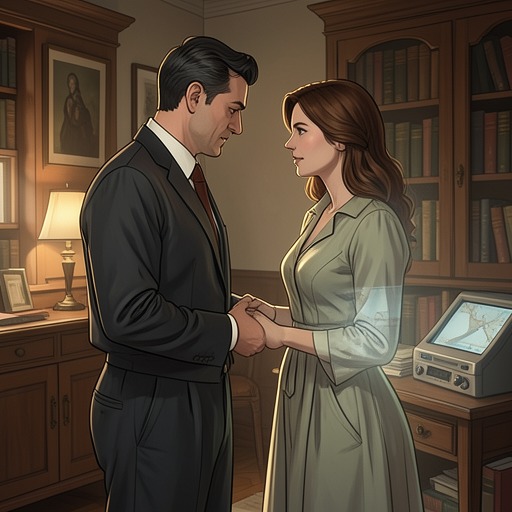
The RavenThe Narrator–Lenore Relationship is defined by loss rather than present exchange. Lenore is a “rare and radiant maiden” whom the Angels name, but she is already lost when the poem begins. Her absence governs the Narrator’s sleeplessness, his attempts to find relief in books, his interpretation of every sound, and his escalating questions to The Raven. The relationship therefore survives as memory, grief, and an unanswered desire for final certainty.
Identity and Background
The Narrator presents Lenore as an exceptional young woman, not merely as someone mourned but as a figure whose beauty and rarity are reinforced by sacred language. He describes her as the “rare and radiant maiden” whom the Angels name Lenore, while also declaring that she is nameless in the world of the living. This contrast gives her identity two forms: she is personally remembered by the Narrator, yet elevated into a distant, almost heavenly status by the language of the poem.
Lenore’s death is the explicit source of the Narrator’s sorrow. He has sought, unsuccessfully, to borrow from his books a cessation of grief for the lost Lenore, so intellectual study cannot displace the emotional object of mourning. His wish for the morrow is likewise an attempt to move beyond the present night, but the desired future offers no demonstrated release. The night, the books, and the memory of Lenore remain locked together in a cycle of wakefulness and pain.
Memory and the Chamber Door
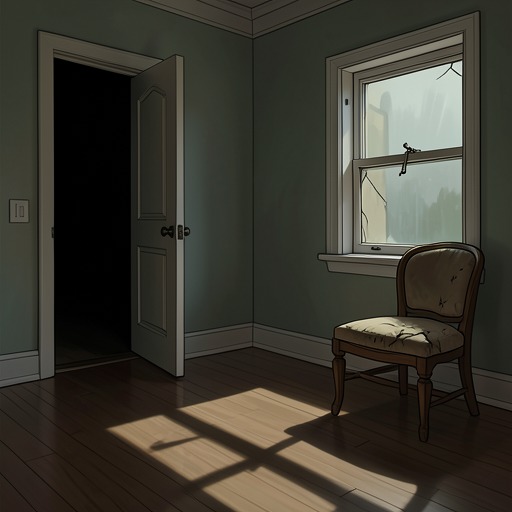
The first disturbance in the chamber is a tapping that the Narrator initially interprets as an ordinary visitor seeking entrance. He repeatedly assures himself that it is “nothing more,” using verbal repetition to contain an anxiety that has not yet found its true subject. When he opens the chamber door, however, he finds only darkness. The absence beyond the door does not settle his mind; instead, it intensifies his wondering, fearing, doubting, and dreaming.
The only word spoken in that darkness is the whispered name “Lenore,” followed by an echo of the same name. This moment makes the relationship audible without making Lenore present. The Narrator calls for her, but the echo supplies no response from her and no new knowledge about her condition. The chamber door thus becomes a threshold between the living speaker and the absent beloved, while the echo turns his own act of remembrance back upon him.
Questions of Relief and Reunion
When The Raven enters and answers “Nevermore,” the Narrator gradually makes the bird a medium for questions about Lenore. His first direct inquiry concerns the possibility of relief from memory: he invokes the Angels and asks for respite and nepenthe from his memories of Lenore. The answer denies that release. The relationship is therefore shown not only as grief over death but as an attachment from which the Narrator cannot obtain forgetfulness.
The Narrator then asks whether there is balm in Gilead, seeking a remedy for the wound that Lenore’s loss has created. The question shifts from private memory toward spiritual consolation, but The Raven again answers “Nevermore.” The repeated answer compresses different possibilities—medicine, mercy, religious healing—into the same negation. Nothing in the encounter enables the Narrator to transform mourning into recovery.
His final question about Lenore reaches beyond earthly consolation. He asks whether, within distant Aidenn, his sorrow-laden soul will clasp the sainted maiden whom the Angels name Lenore. This is a question about reunion, not merely remembrance: the Narrator wants assurance that physical and emotional separation will eventually end. The Raven’s “Nevermore” rejects that hope, leaving the relationship suspended between intense devotion and irreversible absence.
Emotional Development and Ending
Across the poem’s questioning, Lenore changes from the remembered cause of sorrow into the measure by which every possible future is tested. The Narrator first seeks to forget her, then seeks a balm for his grief, and finally asks whether he may embrace her again in Aidenn. Each movement reaches further—from psychological relief, to spiritual healing, to eternal reunion—yet each receives the same answer. The progression makes clear that the Narrator’s hope is not gradually corrected by new evidence; it is repeatedly exposed to the same absolute refusal.
The relationship ends without reconciliation or recovery. The Raven remains seated above the chamber door, and its demon-like eyes and shadow occupy the final image. Because the bird does not leave, Lenore’s absence is not released into a completed past; it continues to structure the Narrator’s present. The shadow on the floor becomes the visible consequence of a grief that has settled over the chamber and over the Narrator’s soul.
Narrative and Thematic Significance
The Narrator–Lenore Relationship supplies the poem’s deepest emotional stakes while remaining mediated entirely through the Narrator’s speech. Lenore never appears to answer him. Her presence is constructed through names, titles, memories, and questions, whereas The Raven contributes only the repeated “Nevermore.” This asymmetry makes the relationship inseparable from the Narrator’s interpretive crisis: he asks open questions, but the bird’s fixed reply forces every possibility into loss.
The relationship also explains the poem’s compulsive repetitions. The tapping at the chamber door, the whispered name Lenore, and the recurring answer “Nevermore” are not decorative returns; they show the mind circling an uncompleted wound. The Narrator’s attempts to reduce events to “nothing more” fail because the absent Lenore gives each sound a larger emotional meaning. By the ending, remembrance has become confinement: the beloved remains the center of the Narrator’s thought, but the possibility of relief, healing, and reunion has been denied.